
Paige Straf, AAg, Agri-Environmental Specialist, Prince Albert
April 2026
You may be considering seeding a new forage stand this spring. Putting in forage is a long-term investment, so it is important to consider a few factors before putting seed in the ground.
Controlling weeds is a crucial part to having a successful stand. If there are weeds present, they can significantly reduce your future yields. If perennial weeds are a problem, it may be useful to wait an additional year to allow more time to control those problem weeds. There are limited options for controlling weeds in established forage stands. Starting out with a clean field is a great first step to ensure success.
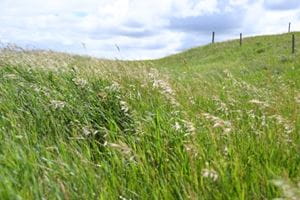
It is also important to consider soil and environmental limitations. Some potential soil limitations could include soil zone, soil texture, salinity or potential for erosion. By looking at the soil conditions of your field, you can choose species that are adapted for those conditions. If you are dealing with coarser soils (i.e., more prone to erosion), you could consider using more creeping rooted grasses, instead of fibrous roots to provide that necessary ground stabilization. Considering species that are adapted to moisture or dry periods can sometimes address your field-specific environmental limitations as well.
Knowing the intended use of the forage stand is helpful to plan for seeding forages. Whether the stand is intended for spring grazing, rotational grazing throughout the season, stockpile grazing or if intended for hay production, determining the end use will help you choose the appropriate species. For example, crested wheatgrass is more suitable for spring grazing as it matures very quickly, whereas brome grasses are better suited for summer grazing as they hold their palatability and nutritional value longer.
Another consideration is how long you intend to keep the stand in production. Some species will establish quickly and be short-lived whereas other species take longer to establish and will persist for many years. Some species, such as slender wheatgrass or orchardgrass, are more susceptible to winter kill and may decline or be reduced sooner than other grasses. Species, like sainfoin, need to mature to seed set every second year to allow the plants to persist or remain viable in the stand.
One last item to keep in mind when seeding forages is to use quality seed. Purchasing certified or common #1 seed is recommended. Seed graded as certified or common #1 will have a lower weed seed content, proven traits or characteristics and known germination and purity, all factors which assist in ensuring better establishment success.
If you are looking for more details on forage seeding and species selection, the Saskatchewan Forage Crop Production Guide or the Forage U-Pick tool online are great resources.
The Resilient Agricultural Landscapes Program, through the Sustainable Canadian Agricultural Partnership, has funding available to producers for seeding forages. The goal of this program is to improve the resiliency of agricultural lands by improving water quality, soil health and biodiversity. The Seeding Tame Forage BMP and Seeding Native Forage BMP are both available to assist producers in seeding perennial forage species. For more information, call the Agriculture Knowledge Centre at 1‑866‑457‑2377 or contact your local agri-environmental specialist.