
By Dean Cortus, PAg, Range Management Extension Specialist, Humboldt
June 2026
Winter kill and thinning alfalfa stands are obvious; however, disease issues may not be as noticeable. Sometimes disease pressures go unnoticed until haying begins and can cause significant yield and quality loss. Therefore, it is important to monitor your alfalfa stand prior to harvest to catch disease pressure early.
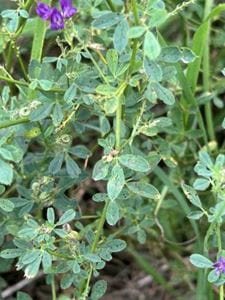
There are several diseases that affect alfalfa crops. Two of the more common ones in Saskatchewan are common leaf spot and black stem. Common leaf spot shows up as tiny black or brown spots on the leaflets. Examining more closely with a hand lens will show lighter brown raised discs in the centre of the leaflets. The spots remain distinct and usually do not blend together. As the infection spreads, the leaves will yellow and drop reducing yields and quality. The fungus overwinters on the alfalfa debris and spores can splash or blow onto new growth during cool, wet weather the following spring.
Black stem can infect all portions of the plant including the root and crown areas. Numerous black to dark brown spots develop on the lower leaves, petioles and stems early in the spring and may expand to large black areas. Lesions that occur on the stem cause wilting above the damaged area. The fungus overwinters on diseased alfalfa stubble, but it cannot exist in the soil for more than two years without it.
Cutting alfalfa early before leaves begin to fall will help reduce yield losses of plants infected with common leaf spot and black stem. Fungicides for alfalfa hay are very limited and may not be cost effective. Practicing good crop rotations to break disease cycles, using good quality seed and resistant varieties and not growing alfalfa after a legume are all good management strategies.
Environmental stress can increase the odds of disease issues. Cool and wet weather are conditions that favour both leaf spot and black stem. Alfalfa hay crops should be scouted for disease regularly to identify issues early so the appropriate actions can be taken.
If you have questions about how to scout your alfalfa stand, contact your local range management extension specialist at 1 866 457 2377.