
By Austin Baron, PAg, Agri-Environmental Specialist, Swift Current
May 2026
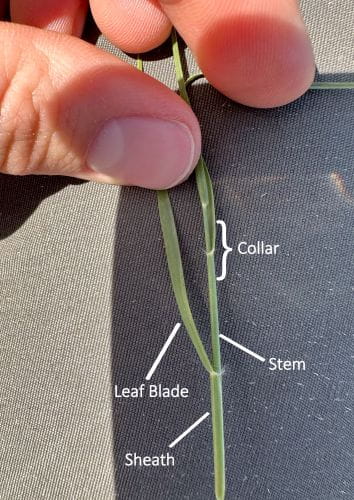
As spring weather sets in and pastures and fields start to green up, you may notice plants that have not been seen in previous growing seasons. Though there are many options for identifying these species, sometimes you want to ask a trusted professional such as your local extension specialist or agronomist. Before taking a hurried snapshot of a plant while out in the field, there are a few things to consider that make identification easier.
Make sure the plant in question is in focus
When taking photos in the field, sometimes the camera focuses on the wrong plant or item in the frame — this is often the case on a windy day. Making sure the plant in question is in focus helps to distinguish key features. Removing the plant from its original location and setting it on a tailgate or console can help get the plant in focus but remember to note what area of the field the plant came from (wet area, upland or side slope, etc.). It is best to take photos with the plant in place as picking them comes with risks such as removal of rare plants or accidental toxicity.
Include additional photos of distinguishing features
If the plant has something that may help distinguish it further, always take extra pictures of those features. For identifying grasses, it may be something like deep veins on the leaves, auricles and/or ligules, or hairs on any part of the plant. If a plant has a flowering or seed head, this is also very useful in identification. Ensure shadows are not obscuring the focal point or key features.
Send good quality photos
When sending photos via email or text message, our devices often want to reduce the size of attachment for ease of sending. If possible, try to avoid resizing the photos. When photo quality is reduced, colour and characteristics of the plant are hard to assess.
Other considerations
Though you do not have to include these things in your photo, it is often helpful to include a note:
- The size of the plant;
- Where you found the plant in the field;
- The time of year (if sending the photo later); and
- Any concerns you have such as whether the plant is toxic to livestock or invasive.
A helpful hint is to take GPS coordinates which lets your specialist use environmental factors such as soil type or slope position to aid in accurate identification.
There are over 40 extension specialists in the ministry’s regional offices who can help identify plants in crop land or pastures. To contact an extension specialist or for more information, please call the Agriculture Knowledge Centre at 1-866-457-2377.