
Karlie McGeough, Communications Consultant, Communications Branch, Regina
JPM Farms, run by Jean Paul (JP), Marlene and Colton Monvoisin, is a multigenerational cattle and grain operation with roots stretching back three generations to JP’s grandfathers.
Today, the family manages 7,000 acres of grassland and 4,500 acres of grainland near the communities of Gravelbourg and Parkbeg, Saskatchewan. Their herd is made up of 400 cows, including registered and commercial Black Angus animals.
JPM Farms is well-respected in the national Angus community, recognized for their focus on genetics and sustainability. In 2023, JPM Farms received the Certified Angus Beef Award as the only Canadian producer honoured that year. For JP and Marlene, the award reflects decades of dedication to breeding quality cattle, countless miles traveled, and their commitment to improving Canadian genetics. JP shared that previous generations who built the foundation of today’s agricultural practices motivate him to keep striving for excellence in his own herd. “The pioneers had to work extremely hard to get cows fed, put up feed, and maintain their herds. I’m a real history buff, and I really appreciate the work they did,” he explained.
Generations of Angus
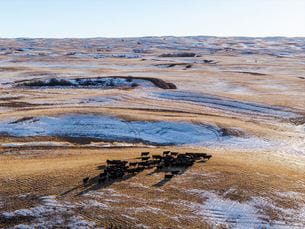
JP’s grandfather first registered Black Angus cattle in the 1930s. His father experimented with exotic breeds in the 1970s, but JP returned to Angus in the early 1990s, building a purebred herd and raising his own bulls.
“I was always interested in genetics, looking at different Expected Progeny Differences (EPDs) and phenotypes on animals that would improve our herd going forward,” JP said.
After his father passed away in 2006, JP and Marlene took over the operation, expanding the livestock side while maintaining grain production. Their success, JP said, comes from a strong family base, working together, and hiring custom work when required.
Two Sites, Two Purposes
JPM Farms’ Gravelbourg location houses calving facilities and wintering pens, while the Parkbeg location, purchased in 2017, focuses on ranch land and native grass. The Parkbeg location also hosts the family’s annual bull sale in March, conveniently located along Highway 1.
“Gravelbourg is where we winter and calve; Parkbeg is ranch land with a lot of native grass and where we summer,” said Marlene. She believes each location provide them with opportunities to manage cattle differently.
Securing Water
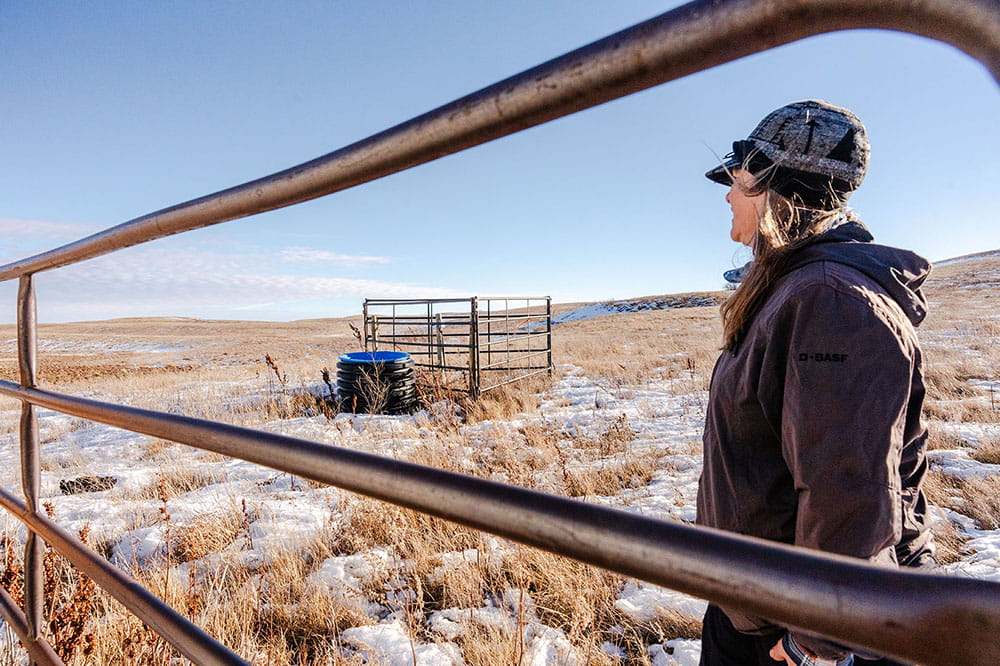
Operating in an area prone to dry conditions has made water infrastructure critical. JPM Farms has taken full advantage of the Farm and Ranch Water Infrastructure Program, under the Sustainable Canadian Agricultural Partnership (Sustainable CAP), to fund dugout and water projects at both locations.
In 2022, JPM Farms drilled and developed a well at their Parkbeg pastures after months of hauling water during dry conditions. Pipelines now deliver water across grazing areas, providing a secure source compared to dugouts that are reliant on snowfall to replenish water supplies. “Using the funding from the Farm and Ranch Water Infrastructure Program made the well less expensive. We viewed it as a long-term investment and an essential asset for our ranch,” said Marlene. The program has been an important tool for producers since 2008. In Saskatchewan, where dry conditions can reduce yield and crop quality and create forage challenges, reliable water is critical to maintain profitability and sustainability. This program helps develop secure and reliable water sources for producers.
Certification and Technology
JP and Marlene are quick to explore opportunities to help them improve practices and validate their existing ones. JPM Farms pursued Verified Beef Production Plus (VBP+) certification to formalize practices in food safety, animal care and environmental stewardship, which they were already following.
“We were doing these things before, but the VBP+ audit proves it,” JP said. “It also helps us access additional program funding and shows we are following best practices within our industry.”
Through Sustainable CAP’s Animal Health and Biosecurity program, JPM Farms purchased new, higher-quality calving cameras.
“I can’t imagine calving without cameras, especially in winter,” Marlene said. The cameras have improved efficiency and reduced stress during heavy calving seasons. “You can watch a cow have her calf, let her mother it, and keep an eye out for any problems.”
Tame Forage for Early-Season Grazing
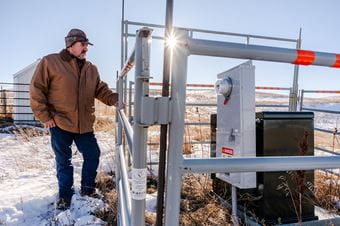
In 2024, JPM Farms received funding from Sustainable CAP’s Resilient Agricultural Landscapes Program and its Seeding Tame Forage beneficial management practice (BMP). Through the rebate program, they seeded 180 acres of tame grass for early-season grazing. With the success of that seeding, they plan to seed another 160 acres this spring.
“We needed a program that would give us tame grass for early season turnout,” Marlene explained. “We have so much native grass but not enough tame grass to turn the cattle out in May or June. Ideally, we graze our native grass later in the year, but you need somewhere for these cows to go early in the spring. That’s why we took farmland and seeded it back to tame species.”
The program is designed to improve soil health, water quality and biodiversity through the adoption of BMPs. The Tame Forage BMP is popular with producers, with funding to help convert annual crop land to forage as well as cover seed and establishment costs. Producers can also receive extra funding for adding pollinator species to their forage seed blend or by signing a voluntary five-year land use agreement where they commit to keeping the land in forage.
Research and Mentorship
JPM Farms has taken part in several Agriculture Demonstration of Practices and Technologies (ADOPT) projects, including corn grazing trials, artificial insemination on replacement heifers and fertilizer rate studies on hay land at their Parkbeg location.
Each project provided valuable data and insights. “We learned some information that we were able to share with other producers,” JP said. “It’s a bad day when you don’t learn something,” he added. “That’s how you get ahead.”
Saskatchewan’s strategic initiative programs, funded through Sustainable CAP, are designed to help producers become more profitable, resilient and sustainable.
From genetics to water infrastructure, JPM Farms has combined tradition with progressive practices to thrive in a challenging environment. By leveraging programs like those offered under Sustainable CAP, JP and Marlene strengthened their operation while mentoring the next generation.
“Our focus is on improving efficiency and achieving higher quality at all times,” Marlene said, noting how these programs support their long-term goals. “We also really enjoy those friendships and relationships and see the potential in young people. Mentorship is a big part of what we do.”
For more information about these programs and how to apply, contact the Ministry of Agriculture’s Agriculture Knowledge Centre at 1-866-457-2377.