
By Samantha Marcino, P.Ag, CCA, Crops Extension Specialist, Yorkton
April 2026
Spring planning is well underway and one of the biggest weed issues for Saskatchewan producers is kochia. Early management of this weed is key for control, before the plant gets too large. Herbicide resistance is a significant struggle, as all kochia in Saskatchewan is assumed to be resistant to Group 2 herbicides. In the last herbicide resistant weed survey in the province, over 85 per cent of the kochia populations were resistant to glyphosate (Group 9). Resistance to Group 4 has been found across the province while Group 14 herbicide resistance was confirmed in Saskatchewan in 2021.
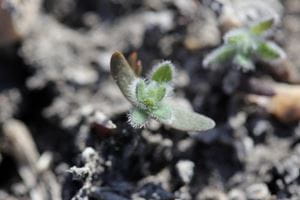
Integrated weed management is a critical part of kochia control. This can include practices like mowing, targeted tillage, proper crop rotations, perennial forages and management of saline areas to prevent the weed from becoming established in your field. Proper use of herbicides can also be used as a tool.
While the resistance of multiple herbicides makes chemical control more challenging, producers still have options. These options vary significantly depending on what crop you are planning to grow and subsequent crops you will be seeding in future years. As always, it is best to check the Guide to Crop Protection to ensure that you are using the product according to the label.
Soil applied herbicides, sometimes thought of as a practice of the past, have made a comeback. Herbicides like sulfentrazone (Group 14), Pyroxasulfone (Group 15), Flumioxazin (Group14) and Ethafluralin (Group 3) can be used pre-seed in different crops. Ensure you check the label of all herbicides to make sure the crop you are planning to seed is listed.
Without the use of Groups 9, 2 and 4, pre-seed herbicide options are much more limited. Groups that are able to control kochia include Groups 6, 14, and 27. In-crop herbicides are also limited with Groups 6, 10, and 27 providing some options. Herbicide layering (using more than one active ingredient targeting the weed at different timings) is a great strategy to help prevent herbicide resistance that may not already be present in the kochia population in your field. Please check the labels and follow directions for all herbicides as these herbicides may not be used in all crops.
One of the key takeaways for kochia control is to target it early in the season while it is still small. As kochia gets larger, it is incredibly tough to control with herbicides and mowing may be the better option. Keeping the seedbank low is key as the seeds have a short longevity, but on the flip side a single kochia plant can produce up to 15,000 seeds. As such, if mowing is part of your control strategy it must be done before the plants have set seed. Kochia plants can produce seeds on the lower part of the plant so the mower should be set as close to the ground as possible while maintaining adequate residue to cover the soil. It may require multiple timings.
Kochia will continue to be a challenge into the future, but producers still have multiple strategies to help keep it under control.
If you have any questions about managing kochia, please contact your local crops extension specialist or the Agriculture Knowledge Centre at 1-866-457-2377.