
By Tony Playter, freelance writer
Effective grazing management is more than just good practice; it is an investment in productivity, profitability and sustainability. Well-managed pastures deliver higher forage yields, support animal health and reduce overall feed costs, while also protecting the long term health of the grassland ecosystem.
By planning and monitoring how livestock graze, producers not only make the most of their forage but also support biodiversity and soil health. In other words, smart pasture management gives ranchers more control, helping both their bottom line and the environment.
Stacey Domolewski, Research and Innovation Coordinator for the Beef Cattle Research Council (BCRC), is a local Saskatchewan expert on grazing management strategies.
“Pastureland is such a critical resource and the central part of the beef industry,” Domolewski says. “Our industry revolves around having quality feed for cattle, which is also the biggest expense for ranchers. This includes pastureland, winter feed and hay.”

Coordinator for the Beef Cattle Research Council
For producers, that means any practice that keeps grass growing longer and healthier translates into direct savings. Strong pastures allow cattle to graze for longer periods or support more animals, reducing the reliance on costly external feed. One of the other outside factors in calculating an accurate carrying capacity is wildlife that may also graze in the pasture.
“Ranchers may have large numbers of elk or deer move through their field at certain times of the year, and that's going to dramatically change the landscape,” says Domolewski. “So those extra animals need to be taken into consideration when producers are calculating their carrying capacity.”
To help with planning, the BCRC offers a Carrying Capacity Calculator, which allows producers to determine the carrying capacity of pastures based on two methods: 1) estimates based on provincial guides, and 2) field-based sampling.
Producers can use the Method 1 calculator if they wish to calculate an estimate of carrying capacity based on available provincial forage production guides. Using Method 1 is easy and works best when the pasture condition (or range health) is similar throughout the field and the forage plant community (or range type) is uniform.
Producers can use Method 2 if they plan on clipping, drying and weighing samples collected from their pasture. Field-based sampling provides greater accuracy but requires more hands-on work. Producers may choose field-based sampling if provincial guides are unavailable for their region or if pasture types or conditions vary within their field. Forage production varies each year, so the Method 2 approach should include multiple years of sampling to estimate the long-term productivity of the pasture.
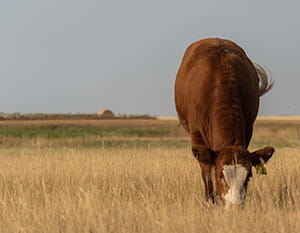
She explained that sampling means selecting random spots that represent the pasture, clipping all forage within that space, drying it and measuring the yield.
Having the right carrying capacity is essential for both cattle and pasture health.
“The right carrying capacity makes sure there’s enough forage available for the herd to maintain a healthy weight or milk production,” Domolewski says. “It’s also very important for the long-term health of the grasslands. The shorter you graze down, the longer it takes to recover.”
The BCRC website offers extensive resources on carrying capacity and grazing management.
“The tool on our website is a great resource,” says Domolewski. “The great thing about Saskatchewan is that you can also visit the Ministry of Agriculture regional offices. Extension staff can provide advice or even come to your farm to view your pastureland—so you don’t have to be the expert yourself.”
For Saskatchewan producers, effective grazing management is not just about today’s herd—it is about ensuring the long-term success of their operations and the ranching community as a whole.