
By Jessica Colby, Communications Consultant, Communications Branch, Regina
When it comes to livestock health, producers face many possible threats. Among these threats, anthrax and bovine tuberculosis (TB) stand out because of their serious impact on both animal health and the livestock industry.
Anthrax can strike suddenly with fatal results, while bovine TB is difficult to detect and poses a risk to both animals and people.
Understanding these two diseases – and separating fact from myth – is key to protecting your herd.
What is Anthrax?
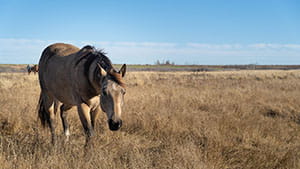
Anthrax is a disease caused by the spore-forming bacterium Bacillus anthracis (B. anthracis). All mammals, including humans, are susceptible to some degree. The ability to infect humans is one of the things that makes anthrax especially important.
The spores of the bacterium B. anthracis are incredibly resilient. They can survive for decades in the soil through heat, cold and changes in moisture.
Livestock most often become infected by grazing in contaminated areas or from contact with an infected animal’s carcass.
In animals, symptoms may include staggering, shortness of breath, trembling, collapse and convulsions. Signs usually appear suddenly, and animals are often found dead.
If you suspect anthrax, contact your veterinarian right away. Do not move or open the carcass, as this allows bacteria to escape and turn into persistent spores that can exist in the environment for decades.
Vaccination is the best way to prevent anthrax. In Canada, the Sterne vaccine is licensed for use in cattle, sheep, horses, goats and pigs.
In Saskatchewan, anthrax cases must be reported to the Ministry of Agriculture’s Livestock Branch within 24 hours. Cases must also be reported to the Canadian Food Inspection Agency (CFIA).
Common Anthrax Myths
Myth: You can stop vaccinating livestock for anthrax once case numbers decline.
Anthrax spores can survive in the soil for decades, and there is no established “safe” time limit where animals in at-risk areas no longer need to be vaccinated. In areas with past cases, yearly vaccination is recommended to protect herds.
Myth: Anthrax spreads animal-to-animal like the flu.
Anthrax is not contagious like the flu. Most infections happen when animals eat, drink or breathe spores from the environment. However, herdmates can still become infected if they lick anthrax-infected carcasses or soil contaminated by a dead animal.
Myth: All animals face the same risk.
All mammals – including humans – can get anthrax, but herbivores like cattle, bison, sheep, goats and horses are most at risk. Pigs, dogs and cats are more resistant. Birds don’t get sick from anthrax but can move spores and contaminate new areas.
Myth: Any sudden livestock death means anthrax.
Anthrax can cause sudden death, but lightning strikes, blackleg and other problems can look similar. Therefore, it is always best to consult your veterinarian to confirm the cause.
What is Bovine Tuberculosis?
.jpg "Multiple bisons in a green field")
Caused by the bacterium Mycobacterium bovis (M. bovis), bovine TB is a contagious disease that affects cattle, but can also infect wildlife, domestic animals and humans. It may also result in livestock production losses, marketing impediments and poses a risk to public health as it is a zoonotic disease, which means it is able to be passed from animals to humans.
Any suspected cases of bovine TB must be reported to the CFIA. The CFIA will then investigate the premises, and if the disease is present, will implement strict quarantine and disease eradication measures.
Bovine TB may be found in the environment and is typically spread from animal-to-animal through inhalation of small aerosol droplets from already-infected animals and from ingesting contaminated food and water. Animals also shed the disease into the environment through respiratory secretions, feces, urine and abscess drainage.
The disease can survive for months once in the environment in cool, moist and shaded areas. This persistence contributes to indirect transmission especially when animals share contaminated feed, water or shelter.
There is no preventative treatment or vaccine to prevent animals becoming infected with bovine TB. To mitigate the risk of infection, cattle buyers can require animals to be tested before purchasing. However, this does not provide a guarantee that cattle will not be infected, as infected livestock can appear to be in prime condition without showing any signs of infection until slaughter.
Common Bovine Tuberculosis Myths
Myth: If an animal has bovine TB, you’ll know.
Animals infected with bovine TB rarely show clinical signs of disease. Most commonly, bovine TB is detected in infected animals at the time of slaughter through routine slaughter surveillance. M. bovis, the bacteria associated with the disease, may stay dormant in an infected animal for years without causing clinical signs or disease progress.
Myth: Bovine TB is easily diagnosable with a simple test.
It is generally difficult to diagnose bovine TB in live animals. The disease can hide in the body and remain undetected in diagnostic tests. This makes it difficult to confirm if the animal is infected with bovine TB.
Myth: We rarely hear about bovine TB in Canada, so we don’t need to be concerned about it.
The reason we do not commonly hear about bovine TB is because of successful efforts in Canada which have nearly eradicated the disease. After nearly 100 years of effort, financial investment and close collaboration with various federal, provincial and industry stakeholders, bovine TB has almost been eliminated from Canada.
If you suspect anthrax or bovine tuberculosis in your livestock, contact your veterinarian.