
By Austin Baron PAg, Agri-Environmental Specialist, Swift Current
March 2026
Soil carbon is an important part of keeping soil healthy and productive.
Discussions often focus on which crops can increase soil carbon stocks. Soil organic matter contributes to many aspects of soil function, including soil quality, biomass yield, water quality, nutrient turnover, water holding capacity and maintaining soil structure. There are several ways to get more carbon into the soil such as above-ground material, root turn over and rhizodeposition (root exudates). All three of these methods add organic matter to the soil; however, this is only a fraction of what makes up the soil’s carbon stores. Decaying plant matter from roots or above-ground shoots is incorporated into the soil in the form of organic matter.
Though not as stable of a carbon form as other types, soil organic matter has many benefits such as acting as a pH buffer, improving soil structure, aiding in water infiltration and more. The soil microorganisms take over the complex task of turning that soil organic matter first into particulate organic carbon and eventually, the more stable mineral-associated soil organic carbon.
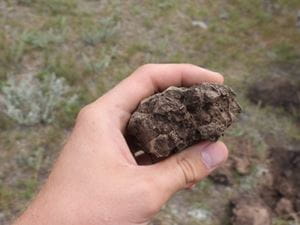
Historically, wheat-fallow cropping systems decreased soil carbon levels by up to 50 per cent. As producers shifted into continuous cropping systems with a focus on no-till with diverse rotations and appropriate fertilizer applications, soil organic matter began to increase and soil quality improved. While we are not seeing the soil return to the state that it was during the times of it being under native prairie, it has returned to a somewhat improved and relatively steady state for soil organic matter and carbon.
Even if most fields have reached a steady state for carbon sequestration, there are still ways to build additional carbon in the soil. One effective way is to incorporate forages in crop rotations, which can significantly boost carbon sequestration. Forage crops have a unique ability to increase the amount of carbon sequestered without depleting the soil organic matter stores.
A 24-year study in Bow Island, Alberta, showed that with adequate fertilizer, forage stands sequestered over 16 per cent more carbon than continuously cropped treatments. This ability to sequester additional carbon mainly stems from the expansive root systems of forage stands. While annual crops typically average 0.5 to 1 metre in rooting depth, perennial grass and forage systems can go much deeper, while also having the advantage of not having to start fresh growing every spring.
Though perennial forages in rotations may not be a fit for every farm, if you are looking at increasing soil carbon stocks, this may be an option for you. To speak with a technical specialist regarding fertilizer recommendations, selecting an appropriate forage blend for your operation, or soil health management, please call the Agriculture Knowledge Centre at 1‑866‑457‑2377.