
By Kaitlyn McMurphy, PAg, Agri-Environmental Specialist, Yorkton
March 2026
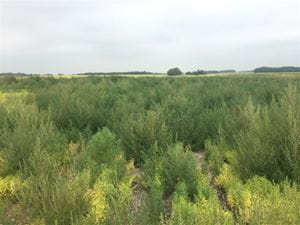
Kochia thrives in areas where competition is limited. Limited competition can be caused by a multitude of factors such as nutrient deficiency, seasonal flooding, poor soil structure or salinity. A soil sample is an important first step, as it helps determine what conditions a producer is facing and why some annual crops may not thrive in certain areas. Seeding perennial forages can be used as a management tool for marginal acres within a field that is struggling with a kochia infestation. Choosing forage species that are well adapted to the soil conditions, rather than seeding an annual crop, can help win the fight against kochia.
Nutrient Deficiency
Legumes such as alfalfa, clovers and vetches have low nitrogen requirements but should be properly inoculated. Grasses have higher nitrogen needs, but when seeded with nitrogen fixing legumes, less fertilizer is required.
Excess Moisture
Species such as timothy, tall fescue, orchard grass, meadow bromegrass and reed canary grass tolerate high moisture and can establish successfully in wet conditions.
Soil Structure
Using a variety of tap rooted and creeping rooted forages can help to reduce the effects of soil compaction, increase organic matter, enhance infiltration and improve soil stability. Many forage blends include both creeping rooted and tap rooted alfalfa varieties to maximize the benefits of each root system.
Salinity
Some forage species show greater salinity tolerance compared to annual crops. Green wheatgrass, tall wheatgrass and Dahurian wildrye have good- to high-salinity tolerance, while salt tolerant alfalfa exhibits moderate salinity tolerance.
Management
Interim management of kochia is important because perennial forages take time to establish. A potential option is mowing kochia during the growing season to prevent seed production. If kochia is cut for livestock feed, remember that seeds can remain viable after passing through the rumen. Before feeding kochia, consult a livestock nutritionist to ensure nitrate, oxalate and sulfur concentrations are within safe limits.
Although kochia is a challenging weed to manage, incorporating well adapted forage species can provide a long term, sustainable solution. Ultimately, using forages as both a restorative and competitive tool allows producers to successfully combat kochia while improving soil health and productivity.