
Corissa Wilcox, PAg, Livestock and Feed Extension Specialist, Swift Current
March 2026
Calving season, whether early or late, can present challenges. Cold stress and muddy conditions not only compromise animal comfort but also create ideal conditions for pathogens to spread, increasing the risk of neonatal diseases such as scours. Implementing proactive management strategies can help reduce these risks and support healthier outcomes throughout the calving period.
Shelter
Windbreaks can provide an added layer of protection to mitigate harsh environmental conditions. The recommended space allowance is one foot of windbreak per cow and a half foot per calf. An effective windbreak should have 25 to 33 per cent porosity to allow controlled airflow. Shelterbelts can also serve as long-term, living windbreaks, offering both protection and additional environmental benefits. Calving shelters also protect animals from environmental elements and provide a designated resting area, helping increase calf comfort.
Bedding
Adequate bedding provides insulation from cold ground surfaces, reducing the risk of hypothermia and frostbite – particularly in newborn calves, which lose heat faster than mature animals. Clean bedding also helps prevent navel infections, especially in muddy or contaminated environments. Pens should be cleaned as needed with fresh bedding added regularly to maintain a warm, sanitary environment.
Body Condition and Cow-calf Nutrition
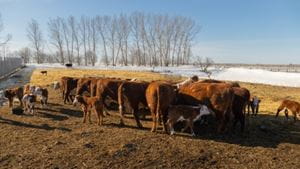
well-bedded areas to reduce cold stress and
mud exposure during calving season.
Ensuring cows enter calving season in adequate body condition is important for maintaining energy reserves during cold weather and limiting hypothermia impacts in calves. Calves born to nutrient-restricted cows are more likely to be weak at birth and have low fat reserves, which limits their ability to insulate themselves. A body condition score of 2.5 to 3.0 (on a 1 to 5 scale) is ideal.
When temperatures drop below –20 C, energy requirements increase. As a rule of thumb, provide an additional one pound per head per day of grain or pellets for every 5 C that the temperature drops below –20 C at midday. For example, at –30 C, cows should receive an additional two pounds of grain/pellets to help meet increased energy demands. Feeding in the afternoon or evening can also support heat production through fermentation during the coldest periods, helping conserve maternal energy stores.
Colostrum provides essential antibodies, fat and protein that can help chilled calves. A thermometer is a useful tool when assessing calf health. Intervention is recommended when a calf’s internal body temperature falls below 37.7 C. If assisting, recheck the calf’s temperature every few hours and its sucking ability.
Animal Movement
Controlling animal movement is another effective strategy to reduce the risk of pathogen spread in confined systems. The Sandhills Calving System helps decrease pathogen exposure by separating freshly calved pairs from pregnant cows. This system also reduces the potential for exposure to mud and fecal contamination during nursing.
Being prepared for variable weather conditions during calving season is important for maintaining cow-calf health and ensuring a successful calving season. Work closely with your veterinarian to ensure effective prevention and treatment protocols are tailored to your herd. For more information, contact your local livestock and feed extension specialist or the Agriculture Knowledge Centre at 1‑866‑457‑2377.