
By Jacqueline Drieschner, PAg, Agri-Environmental Specialist, North Battleford
January 2026
Establishing a productive forage stand in Saskatchewan is a long-term investment that requires careful planning and risk management. Due to the high up-front investment involved in forage establishment, failures can lead to significant financial and operational setbacks. Saskatchewan producers have access to programs and insurance options designed to help manage financial uncertainties and support successful forage establishment.
Resilient Agricultural Landscapes Program
The Resilient Agricultural Landscapes Program offers cost-share funding for both tame and native forage seeding to improve and protect soil resources and provide biodiversity benefits.
In the Seeding Tame Forage Stream, land must be in annual crop production for two years prior to tame forage establishment. Producers can receive a rebate for 50 per cent of eligible costs for seeding tame forage to a maximum of $30,000. Through this stream, producers may opt into a land use agreement for maintaining the tame forage for five years and receive an additional payment of $100 per acre. By signing a five-year land use agreement, producers can claim 50 per cent of eligible costs to a maximum of $60,000.
In the Seeding Native Forage Stream, producers can claim 90 per cent of eligible costs for seeding native forage to maximum of $30,000. Land does not need an annual cropping history to be eligible for the native forage stream.
To learn about eligibility, funding levels, or eligible expenses covered by these programs, reach out to your local agri-environmental specialist or contact the Agriculture Knowledge Centre at 1-866-457-2377.
Forage Establishment Benefit Option Insurance
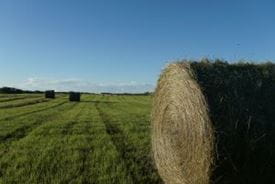
southern Saskatchewan
The Forage Establishment Benefit Option through Saskatchewan Crop Insurance Corporation (SCIC) protects newly seeded forage acres intended for hay, grazing or seed production against establishment failure risks. It is a stand-alone option, not tied to yield-loss insurance. Acres seeded between October 15 and June 20 are eligible for this option. Premiums vary by risk zone and forage type with claims assessed the following year. The deadline to apply for the Forage Establishment Benefit Option is March 31.
For more information, contact the Crop Insurance Customer Service at 1-888-935-0000.
AgriStability
AgriStability is a margin-based risk management program delivered by SCIC. It is designed to protect producers when their farm income drops significantly due to factors like weather, increased costs or declining commodity values. AgriStability uses margins to determine if you are eligible for a benefit. Coverage is for the whole farm and personalized based on each farm’s history. The deadline to enrol in AgriStability for the 2026 program year is April 30, 2026.
For more information, visit the AgriStability website or contact their Call Centre at 1-866-270-8450 or connect with your local SCIC office.
Bottom Line
Saskatchewan producers have a few options available to create a comprehensive risk management strategy tailored to their operation. There are other programs through organizations such as, Ducks Unlimited Canada or Saskatchewan Association of Watersheds, who also provide financial support for forage establishment, each with its own eligibility criteria and unique goals. Any of these tools can help producers manage establishment costs, protect against crop failure and stabilize income, while building resilience in Saskatchewan’s forage systems.