
By Jason Falk, AAG Agriculture Program Specialist, Swift Current
March 2026
The Farm and Ranch Water Infrastructure Program, funded at a rate of 60 per cent federally and 40 per cent provincially under the Sustainable Canadian Agricultural Partnership, has supported Saskatchewan producers for many years and funded the construction and expansion of thousands of dugouts across the province. The program offers 50 per cent rebate up to a maximum of $75,000, to eligible producers and for eligible projects.
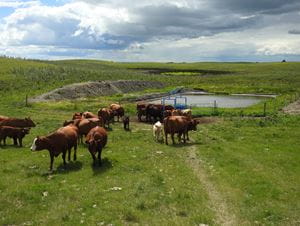
Before beginning construction, an important first step is to have your project screened by an agriculture programs specialist in the Ministry of Agriculture. Our specialists will review your project’s eligibility under the program and help identify any required permits or approvals prior to construction. Specialists screen for permits such as an Aquatic Habitat Protection Permit, which is required if construction occurs within the bed, bank or boundary of a watercourse. Most dugouts are under 1.3 million U.S. gallons in size; however, projects exceeding this volume require a Water Rights Licence. If a project is located on environmentally sensitive land, permits from the Ministry of Environment will also be required. In addition, if the dugout is to be constructed on land you do not own, written permission from the landowner must be obtained. If the dugout is on Crown land, approval is required from a Ministry of Agriculture land management specialist.
One of the most common questions producers ask is where and how to build a dugout that will provide a reliable long-term water supply. According to Duncan Spenst, Supervisor of Extension Services with the Water Security Agency, good dugout development starts with careful planning.
“Producers should size their dugout based on the amount of water required on an annual basis while also accounting for losses due to evaporation and ice formation,” Spenst explained. “Constructing enough capacity to provide two years of water supply is recommended to allow for carryover during years with poor runoff.”
Selecting an appropriate site can be challenging, but gathering more information early helps reduce risk. One effective way to assess potential sites is to dig test holes. Spenst recommends digging five to six test holes spaced at least 100 feet apart and digging at least four feet deeper than the proposed dugout depth.
“Test holes help identify sand seams, water tables or soil conditions that could affect water storage capacity or water quality,” he said.
Once a suitable site has been selected and construction begins, good construction can improve dugout performance and longevity. Levelling spoil piles and using rock riprap where necessary can help stabilize banks and reduce erosion. Establishing a grass buffer of at least 30 metres around the perimeter of the dugout is also recommended, as vegetation helps filter sediment and nutrients during runoff events and contributes to improved long-term water quality.
For more technical information related to dugout design and construction, producers are encouraged to contact the Water Security Agency at 1-866-727-5420. For questions related to funding, program eligibility or to have a project screened, producers can contact their regional agriculture programs specialist or call the Agriculture Knowledge Centre at 1-866-457-2377.