
By Bailie Barnett, AAg, Agri-Environmental Specialist, Moose Jaw
February 2026
As winter enters its final stretch, the promise of longer days and green pastures is just ahead. While it is tempting to send your herd out to graze as the first blades of grass appear, timing is critical to protect pasture health and long-term resiliency. Taking time to reflect on the past winter can reveal important management considerations before grazing begins.
Winter weather on the prairies can be volatile, and it is not uncommon for conditions to vary week to week. Temperature swings and freeze-thaw cycles can have damaging effects such as disrupting soil structure and breaking plant dormancy. Repeated cycles can lead to frost heaving, where plant crowns and roots are pushed upwards, increasing the risk of winter injury. Recent years have also had less snow cover, leaving plants vulnerable. Most forage species can tolerate temperatures down to -15 C to -20 C, but without snow protection, water inside plant cells can freeze, resulting in tissue damage.
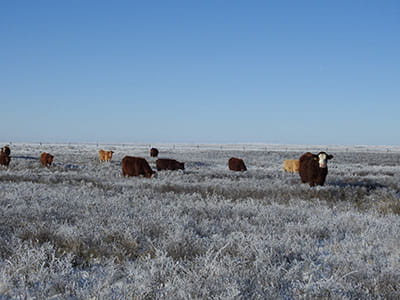
Feeding livestock on pasture during winter comes with added considerations. Heavy, repeated traffic can lead to soil compaction, especially when warmer weather creates muddy or soft conditions. Nutrient overload is another concern, so it’s important to adopt wintering strategies that spread nutrients evenly across the field rather than concentrating them in one area.
Tame and native forage stands respond differently to winter stress. Typically, tame forages are more sensitive to harsh winter conditions but are faster to grow in the spring. Including winter-hardy species like tall wheatgrass and hybrid bromegrass in tame stands can help boost resiliency once established. Native forages are generally hardier, being naturally adapted to prairie conditions, but take longer to grow in the spring and still require responsible grazing to maintain resilience. A good rule of thumb is waiting until the plants are at the three to four leaf stage before turning animals out.
When grazing season begins, one tool for grazing management is to determine carrying capacity and set appropriate stocking rates to prevent overgrazing. If you haven’t already, consider adopting a rotational grazing system that allows rest periods and varying timing of grazing to support long term plant health and recovery. Pay close attention to sensitive areas such as riparian areas for overuse. Use strategic placement of salt and mineral supplements to help move livestock away from these areas or consider an exclusion fence. Since cow nutritional needs spike in spring post-calving, always ensure forage quality and quantity align with their requirements.
In short, successful spring grazing starts long before the first green shoots appear. Understanding how winter conditions impact your pastures and adjusting management accordingly can make the difference between a resilient stand and one that struggles all season. Additionally, producers can access funding through the Resilient Agricultural Landscapes Programs for projects such as fencing to protect native range and riparian areas.