
Dean Cortus, PAg, Range Management Extension Specialist, Humboldt
February 2026
We know moisture is the most limiting factor in forage and pasture productivity. Rainfall during the growing season has become more unpredictable, making it difficult and stressful for ranchers to manage grazing on pastures. Seeding spring and winter annuals is a good option to provide additional grazing resources or extend the grazing season. If you have cropland to spare or are rejuvenating an old hay stand, this may be an option to consider.
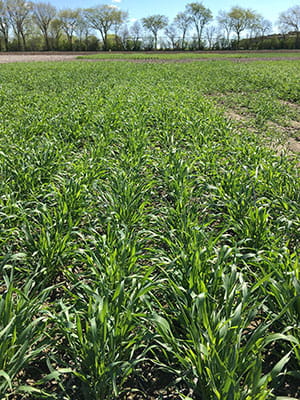
Spring seeded cereals such as oats and barley will provide grazing approximately six weeks after seeding. They can be grazed when growth is at least six inches tall or when the seed rows are filled ensuring plants are established. Barley or oats will give the fastest growth and be the earliest annuals to graze. If grazed at six inches to pre-boot it will regrow for another grazing event.
Intercropping spring seeded annuals with spring seeded winter varieties, such as fall rye and winter triticale, can provide season-long grazing. Spring cereals will provide early summer grazing and the winter annuals will establish later and can be grazed into the fall. There is potential to utilize the winter cereal again next spring for grazing once it overwinters.
For early spring grazing, fall rye, winter wheat or winter triticale seeded in mid-August to mid-September are great choices. The crop should reach the three-leaf stage with sufficient tillers before the first hard frost for winter hardiness and good growth in spring. Use the same principles as spring seeded cereals to determine when plants are ready to graze. Manage the stand to maintain a height of about four inches to avoid cutting off the growing point. Plants can remain in a vegetative state by allowing re-growth before grazing again and prior to plants heading out.
Annuals can be grazed more aggressively than perennials if cattle are monitored. Rotational grazing management with periods of rest can boost yields, minimize waste and provide multiple grazing events. Nitrate poisoning is a concern when grazing annuals if the crop has been stressed by drought, frost or other events. The situation should be monitored more closely if the soil already has high nitrogen levels.
Using annual forages is an excellent resource to complement existing perennial tame or native pasture stands. They can take pressure off those stressed pastures by providing them with additional rest periods in the spring or fall to increase litter levels and pasture health. Cattle can be kept on pasture longer, reducing winter feeding costs and returning nutrients to the land base. For more information, contact your nearest Ministry of Agriculture Regional Office or the Agriculture Knowledge Centre at 1-866-457-2377.