
By Trevor Lennox, PAg, Range Management Extension Specialist, Swift Current
December 2025
Some producers are revisiting their pasture rental agreements to ensure they accurately reflect their current situation. One of the biggest influences on pasture rental rates has been the rise in land values in recent years. Landowners will want a return on the land equivalent to what they would make if the money was invested elsewhere, which raises the question: What is the expected rate of return on pastureland?
In a recent issue of the Saskatchewan Stock Growers Association publication Beef Business, Tim Hammond with Hammond Realty wrote that pastureland doesn’t usually generate the same level of return that higher quality grain land does. In reviewing past data, Tim found that grain land typically generates 3.0 to 3.5 per cent annual cash rent return, but pastureland didn’t stack up the same way with pastureland typically generating a return of 1.9 to 2.7 per cent.
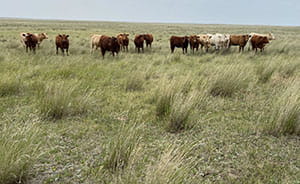
The Ministry of Agriculture has three publications to help producers and landlords come to an agreement when discussing pasture rental or custom grazing arrangements. The Custom Grazing Cattle guide was developed to determine a break-even pasture rental or custom grazing rate using land return on investment, fence and water depreciation, taxes and forage establishment costs. The guide contains an example where producers can work through their own scenario to calculate their total cost per acre. Next, determine the grazing capacity of your pasture using the Initial Stocking Rate guide. This results in a daily grazing fee generated based upon your production information along with an allowance for labour, if you are supplying managed pasture.
The landlord and renter both need to agree on the pasture stocking rate. There are four components that need to be considered when discussing stocking rate. These are the number of cattle, type (i.e. yearling heifers vs. mature cows), size of cattle (i.e. 1,000 vs. 1,400 lbs) and grazing length (i.e. 100 vs. 150 days).
Water quantity and quality are both important factors to consider when evaluating the value of pastureland. Better water sources will translate into improved gain and reduced sickness.
Lastly, a Pasture Lease Agreement provides additional management information, important considerations and guidelines when negotiating a pasture lease agreement on privately owned land. Although many pasture agreements start with a casual discussion, it is always good to formalize the agreement in writing. It is important to have good communication between both parties, such as regular check-ins through the season to keep each other in the loop as the grazing season unfolds. Good communication builds trust and transparency. Even if it is bad news, you are better off sharing that directly with the other party rather than having them find out through someone else.
For additional information regarding stocking rates or determining your pasture costs, you can reach out to a local range management extension specialist by calling the Agriculture Knowledge Centre at 1‑866‑457‑2377.