
Jenifer Heyden, PAg, Livestock and Feed Extension Specialist, North Battleford
January 2026
Some producers are in the midst of calving, others will begin shortly and some will wait for warmer temperatures in May and June. Weather conditions are unpredictable, but most producers will see some cold and wet weather during calving season. Calving difficulties during cold weather means even more stress on the cow and newborn calf. Cold stress can also increase a calf’s susceptibility to certain diseases like scours, pneumonia and navel infection – be aware of these things.
Wet and cold can be a deadly combination, especially for newborn calves. Having portable windbreaks or permanent shelterbelts in your calving area helps mother cows to get out of the wind and lessens the sharpness of the cold. Adequate bedding is also important as it provides a dry area for mothers and calves to lie down and limits their exposure to the elements. It can also help reduce frozen ears, tails and feet on newborn calves. Check the cows more frequently when cold weather hits, if there’s a problem brewing, you’re aware of it much sooner.
If calves get to the point of being hypothermic, they need to be warmed up. Methods for re-warming include using a hot box, warm water baths, warm air or heat lamps or warm blankets. If using a warm water bath or warm blankets it is necessary to change them often to maintain a consistent warm temperature. Once the calf has been warmed and is stable, it should be returned to the cow. Watch it closely and monitor its condition, especially if the weather remains cold and wet.
quality and milk yield.
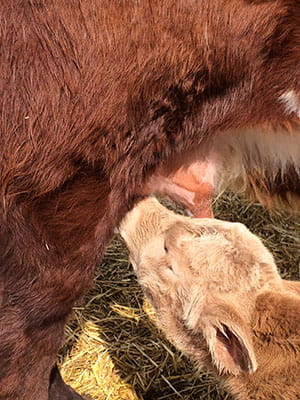
One of the best ways to prevent chilling in calves is to make sure they’ve gotten up and nursed within two hours of birth. That nice warm colostrum will do wonders and is vital. Newborn calves do not have a fully developed immune system when they are born. Colostrum is the first milk available to a newborn calf; it is rich in proteins and antibodies required for immune function and disease resistance. Calves should consume five to six per cent of their body weight in colostrum within the first six hours of life, and that amount again within the next six hours of life. It is critical the calf nurse and receive adequate colostrum within the first 12 hours of its life – after 24 hours the calf’s digestive system is not able to absorb the large proteins and antibodies in the colostrum.
The amount of colostrum and the amount of antibody concentration are lower in first and second calvers than in older cows. Colostrum from older cows has more antibodies due to greater disease exposure. Good nutrition before calving increases the quality and quantity of colostrum and subsequent overall milk production. Vitamin E improves colostrum quality, immune function and reproductive performance. A deficiency in Vitamin E will result in retained placentas, reduced fertility and poor growth rates. Vitamin E is expensive but necessary, especially six weeks prior to calving and through to re-breeding.
Remember that during bouts of cold, wet weather pregnant or lactating cows will require more feed in order to have enough energy for fetal growth, maintenance and milk production as well as just staying warm. Calves born to undernourished cows have less energy reserves than those born to well-fed cows in good condition.
Newborn calves need to be dried off and nurse soon after birth in order to maintain an adequate core temperature, receive important antibodies and proteins via the dams colostrum and have sufficient energy to get a good start to a productive life. A good start is key to productivity and profitability at the end of the season.
For more information on calving, contact your local livestock and feed extension specialist or call the Agriculture Knowledge Centre at 1-866-457-2377.