
Alanna Jonson, PAg, Agri-Environmental Specialist, Swift Current
January 2026
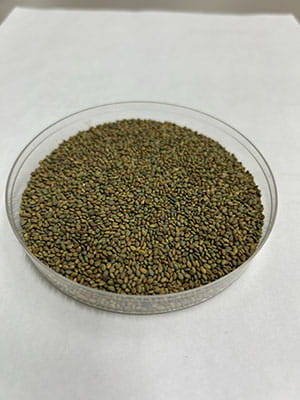
It is important to select forage species that are well suited to a region and specific field. Tools such as the Forage U-Pick can help assess if a species is well adapted to an area, but it is also important to consider the quality of seed being purchased. Seed grade provides information on specific parameters including germination and purity of a seed lot. Purchasing seed that is graded as Certified #1 or Common #1 can be beneficial, indicating the lot has met pre-determined minimum standards. However, requesting additional information can help guide seeding rates and determine whether a seed meets the operation’s goals.
Seed tags typically only give a small amount of information, such as the blend or grade. Requesting the Report of Seed Analysis or a seed certificate can provide additional information. At first glance, some of these documents may look daunting but there are some helpful things to look for.
First, it is important to see if the seed is evaluated by Canadian standards (or similar wording). From there, the information on germination, hard seeds, inert matter and how many weeds are in a sample can be reviewed. These details can help predict how much of the seed that will be put into the ground is the desired forage seed. The certificate can further break down how many seeds are primary noxious, secondary noxious, other weeds and other crops.
The number and species of weed seeds is one of the factors that impacts the grading of forage seeds. For example, the category Certified #1 has a lower weed tolerance than Certified #2, which, depending on the forage species, could double the number of secondary noxious weeds. Reviewing these details prior to making a purchase can make planning future management considerations easier.
For more species specific information regarding seed grades, visit the Government of Canada Seed Regulations.
Through the planning process, there are some additional questions to consider, including:
- Should the seeding rate be increased?
- Are weed species already in the area?
- What management actions might be required into the future?
For example, “other plants” could include other tame forages which may not be a concern in one field; however, the inclusion of the designated noxious weed species such as night-flowering catchfly or downy brome may be of great concern. The analysis is based off a small sample of the seed lot, so it cannot capture every detail but it is a way to set expectations and make predictions as part of a planning process.
If you are interested in learning more about identifying and controlling weeds, you can register for a variety of webinars in the weed management series running February 19 to April 29, 2026. For more information on ministry programs and services, please call the Agriculture Knowledge Centre at 1-866-457-2377.