
Released on January 28, 2026
The Ministry of Environment, in partnership with the Global Initiative on Ungulate Migration (GIUM), is working to protect pronghorn populations in Saskatchewan by mitigating threats to their seasonal migrations - an essential factor in their long-term survival.
"Our province is blessed to be part of the pronghorn's Canadian range," Environment Minister Darlene Rowden said. "In addition to being a sought-after game species, pronghorn viewing has become a popular activity with wildlife enthusiasts, due its iconic status as a native grasslands species."
Pronghorn in Saskatchewan live at the northern edge of their range and depend on seasonal migrations to find food and good habitat. Human activity often breaks up migration routes, creating barriers making movement more difficult and increasing their risk of mortality along the way.
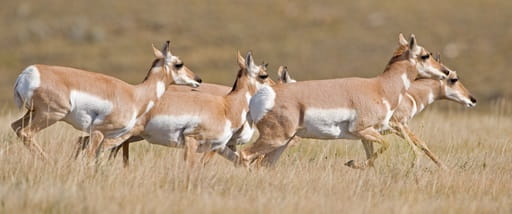
GIUM focuses on conserving migratory ungulates, large land mammals such as elk, bison, wildebeest and caribou - and safeguarding their seasonal movements. These migrations are vital for healthy ecosystems, rural economies and predator-prey relationships. Using data from tracked pronghorn in Saskatchewan and Montana, GIUM has developed detailed migration maps that now guide efforts to protect corridors and inspire global conservation action.
After a century of dramatic fluctuations, Saskatchewan's pronghorn population has stabilized at roughly 15,000-20,000 animals. However, long-term survival hinges on protecting native prairie and migration corridors. Growing threats, including climate change, extreme weather and expanding development continue to challenge pronghorn movement and resilience.
For more information about GIUM, visit: Global Initiative on Ungulate Migration.
-30-
For more information, contact: