
Released on November 5, 2025
The Ministry of Environment is calling on hunters in the boreal transition zone and along the eastern border to submit their animal heads for chronic wasting disease (CWD) and bovine tuberculosis (TB) testing.
"Hunters are integral to our efforts to track and manage CWD," Environment Minister Travis Keisig said. "In the last year, we received more than 2,000 submissions to the CWD hunter surveillance program - proof of just how dedicated the hunters of Saskatchewan are to protecting wildlife in this province. We are sincerely grateful to all who contributed to this ongoing effort."
This hunting season, CWD testing is mandatory in WMZs 43, 47, 50 and 55, and bovine TB testing is mandatory in WMZs 37 and 39. Across other zones in the province, CWD testing for all cervids is voluntary but encouraged. The data from submitted game heads helps track CWD rates in wild cervids and confirms that wildlife populations remain free of bovine TB.
How to get a game head tested
Hunters have one month from the time of harvest to submit their game heads, or until January 21, 2026, whichever is first.
- Hunters can register online at cwdsk.ca to obtain a unique tracking number.
- With the tracking number, hunters can then drop off the game head at any designated CWD drop-off location.
- Visit saskatchewan.ca/cwd for sampling instructions, drop-off location maps and test results.
CWD testing is free of charge. Hunters in bovine TB testing zones who wish to retain their head for a Euro mount, can visit sampling stations on select dates.
About CWD
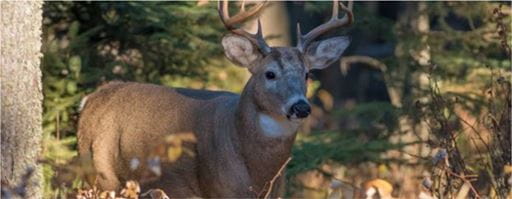
CWD is a contagious neurological disease that affects cervids such as deer, moose and elk. It is fatal and has no known cure. Testing plays a vital role in tracking the disease's spread and guiding conservation and management efforts.
While there are no known cases of CWD in humans and the risk of transmission is considered low, hunters are advised not to consume or share meat from animals that test positive.
If your animal tests positive for CWD, the carcass and meat should be properly disposed of:
- Small amounts of processed meat can be double-bagged and placed in regular household waste.
- Larger quantities of meat or whole carcasses should be taken to a landfill or a Ministry of Environment carcass disposal bin.
Please check with your local landfill before disposal, as not all facilities accept animal carcasses.
About bovine TB
Bovine TB primarily affects cattle and other mammals such as bison and elk; moose and deer are also susceptible. However, bovine TB has never been detected in Saskatchewan wildlife. Ongoing surveillance and rigorous testing protocols continue to ensure our animals remain healthy.
If you suspect your harvested animal has bovine TB, please take a photo and email it to the Ministry of Environment at centre.inquiry@gov.sk.ca, or contact the Canadian Wildlife Health Cooperative at 306-966-5815.
-30-
For more information, contact: