
Claire Ledingham, Public Trust Specialist, Regina
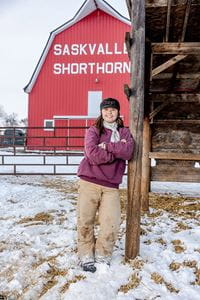
Morgan Lehmann of Rosthern, Saskatchewan is a fourth-generation producer on her family’s commercial and purebred cow-calf ranch. Whether it’s moving cattle on pasture in the summer, weaning in the fall, feeding in the winter or organizing the family’s annual bull sale in the spring, Morgan is heavily involved. Her family is continually working to improve their herd, their land and the legacy they will pass on to future generations.
“There’s something special about being a good steward of what you can control in circumstances that you can’t control,” Morgan said.
Morgan’s commitment to growth and learning is demonstrated by her current pursuit of a master’s degree in Large Animal Clinical Sciences at the Western College of Veterinary Medicine. With her ranching background, Morgan is passionate about ensuring agricultural research translates into practical solutions that support producers in making informed decisions. A self-proclaimed life-long learner, when Morgan heard about the Next Gen Agriculture Mentorship Program, she couldn’t pass up the opportunity to be mentored by an industry leader, attend industry events and network with the next generation of Saskatchewan’s agriculture industry.
Building Skills, Confidence and Career Direction
The Next Gen Mentorship Program is an 18-month, industry-wide mentorship experience that provides mentees with business and leadership skills, a deeper understanding of the industry, and strategies to advocate for agriculture. Morgan graduated from the program in March 2026.
“The people, the financial support for learning, the professional development opportunities and the structured trainings of the program have challenged and helped me grow as a person,” Morgan said of her time in the program.
Board governance training is required for all mentees, and it has directly supported Morgan in the many leadership positions she serves in.
“Board governance training was one of the main reasons I applied for the program,” said Morgan. “I now feel more confident in executive roles and can focus on the business at hand, knowing how to accomplish our objectives as a board.” In addition to formal career development opportunities, the Next Gen Mentorship Program also provides personal development opportunities.
During her time in the program, Morgan made two big decisions about her future in agriculture; she decided to start a master’s degree and began engaging in succession planning discussions with the intent of coming back to the family farm full-time. Building relationships with other young producers in the Next Gen Mentorship Program, and observing the satisfaction they had with their careers, helped Morgan in her decision to come back to the farm. Morgan also credits her mentor, Scott Wright, for encouraging her to set clear goals for her future.
Mentor and Mentee
Scott Wright, Director for the Livestock and Forage Centre of Excellence at the University of Saskatchewan, has built a diverse career in the agriculture industry.
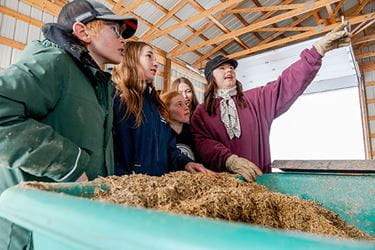
“He is a constant support and wealth of knowledge,” Morgan said when asked about her mentorship experience with Scott. “He meets with me for lunch every two weeks and he even came out to see our bulls at the bull sale, walked my pastures with me during calving, and helped me fix a gate.”
Scott put his experience and knowledge of agriculture to use as a mentor and encouraged Morgan to continually improve her operation. When walking pastures together, Scott took the time to take soil cores and look at root mass, explaining how grazing impacts grasslands and discussing different pasture management strategies. Morgan found value in the mentorship not only because of the practical skills she’s gained but also the personal skills.When asked to share one piece of advice from Scott, Morgan didn’t share practical knowledge about pasture management, instead she said, “see the person and where they come from before you judge or react to their actions and always assume people have the best intentions. Also, before you can teach anybody anything, you need to figure out what you need to learn from them”.
Championing Women’s Contributions in Agriculture
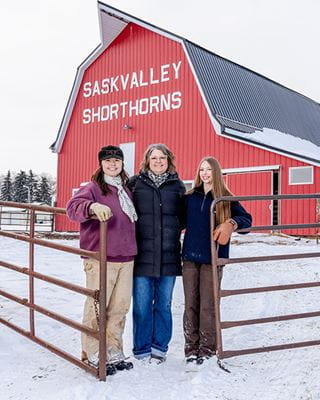
As part of the Next Gen Mentorship Program, Morgan attended the Saskatchewan Women in Ag conference in fall 2025 where she was reminded of the importance of representation and how powerful it is to see women in leadership roles. Fittingly, the United Nations has proclaimed 2026 as the International Year of the Woman Farmer to recognize women’s critical contributions to agriculture and food systems. Morgan recognizes that she is fortunate to have grown up in a country and a generation that encourages women to pursue roles in agriculture, though there is still room to grow.
“A common thread I see is that women are too quick to tear ourselves down, compare ourselves to others and downplay our accomplishments. I hope my story helps women to celebrate themselves and to acknowledge everything that they do, no matter how visible it is from an outside perspective,” said Morgan.
Staying Connected and Giving Back
The Next Gen Mentorship Program recently announced its newest cohort of mentees and mentors this Spring. Morgan encourages anyone in a mentee position to set clear goals with their mentors and to reach out early and often. She also encourages young producers to foster relationships with other young people just getting started in their career as there is something to be learned from everyone.
Although the new cohort has started and Morgan’s time in the Next Gen program has come to an end, she intends to continue to stay involved in mentorship.
“Scott has our calendar invite set to never ending. So, in five years I can tell you I have a lunch meeting with him every other week,” Morgan said with a laugh.
For more information on the Next Gen Mentorship Program, please visit the Next Gen Mentorship Program page on the Agribition website.