
Paula Steckler, Senior Communications Consultant, Regina
Saskatchewan is a global leader in agriculture and agricultural research has long been one of the province’s most effective tools for building competitiveness.
Breakthroughs in crop breeding, disease resistance, livestock health and environmental sustainability have shaped the province’s identity as an exporter of high‑quality agri‑food products. While markets, weather patterns and global trade conditions continue to shift, Saskatchewan’s long‑term strategy relies on research as the most reliable path to resilience and growth.
In 2026, the Governments of Canada and Saskatchewan announced over $14 million in crop, livestock and forage research through the Agriculture Development Fund (ADF) and the Strategic Research Initiative – both supported by the Sustainable Canadian Agricultural Partnership. Research projects are selected through an annual competitive process to identify research with the potential to help Saskatchewan’s producers remain innovative, profitable and competitive.
Crops
This year’s investment includes $7 million to support 38 new crops research projects through the ADF. Thirteen agricultural industry partners provided an additional $3.2 million to support research that aligns with industry priorities. The projects address a wide spectrum of priorities, including: evaluating the performance of subsurface drip irrigation; identifying new ways to build resistance to wheat stem sawfly; enhancing tolerance to drought and phosphorus deficiency in lentil crops; managing riceworm infestations in northern Saskatchewan wild rice production; and validating bale wrapping material made from flax straw and oat hulls.
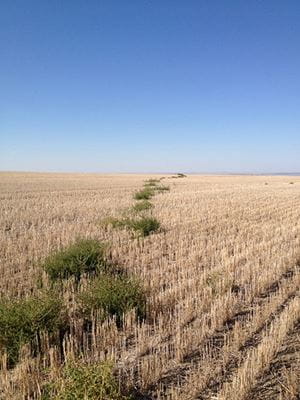
solutions for herbicide resistant kochia
Another $2.5 million was invested through the Strategic Research Initiative to study the long-term management of herbicide-resistant kochia and wild oats. The project, led by Dr. Shaun Sharpe at Agriculture and Agri-Food Canada (AAFC), will accelerate development of sustainable solutions for producers to manage herbicide-resistant kochia and wild oat. The collaborative initiative involves a multidisciplinary team from AAFC, the Universities of Saskatchewan, Regina, and Manitoba, and the National Research Council.
Livestock and Forage
Beyond crop research, Saskatchewan is investing heavily in the livestock and forage sectors. This year’s ADF funding includes $4.5 million for 25 new livestock and forage research projects, each designed to improve productivity, stability and animal health. These projects range from breeding enhanced forage varieties to developing new diagnostic tools that can identify diseases earlier and more accurately. Researchers are also examining novel ways to detect ergot exposure in cattle, protecting herd health.
Thirteen industry partners are contributing more than $1.3 million to these projects, reflecting the strong alignment between research priorities and producer needs. This collaborative model has become a feature of Saskatchewan research, allowing scientists, industry groups and producers to shape research agendas together.
Additionally, the federal and provincial governments renewed $3.9 million, multi-year partnerships with two worldclass research organizations, the Prairie Swine Centre (PSC) and the Vaccine and Infectious Disease Organization (VIDO). These organizations contribute expertise on topics such as swine production efficiency, vaccine development, and infectious disease management.
These areas of research are crucial and will only grow in importance as global demand for sustainable protein continues to rise. Maintaining robust, well‑resourced research institutions ensures Saskatchewan remains competitive in a research landscape increasingly driven by technological complexity and international collaboration.
As Saskatchewan positions itself for the future, these research investments reaffirm the province’s role as a global agricultural leader. By aligning government, industry and research expertise, the province is ensuring that new discoveries deliver practical benefits for producers. This collaborative approach strengthens competitiveness, supports sustainability, and equips Saskatchewan’s agriculture sector to thrive in a rapidlychanging world.