
Dr. Wendy Wilkins, Disease Surveillance Veterinarian, Ministry of Agriculture
Dr. Nathan Erickson, Western College of Veterinary Medicine
The Disease Investigation Unit, a partnership between the Western College of Veterinary Medicine (WCVM) at the University of Saskatchewan and the Saskatchewan Ministry of Agriculture, has helped the province’s livestock producers for more than 30 years. When producers and their veterinarians run into a disease problem they cannot figure out, the unit is there to help.
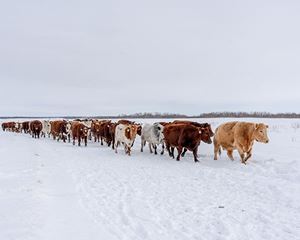
Most years, the Disease Investigation Unit takes on about 15 cases across the province, and beef cattle make up the bulk of these. Close to half of all cases end up being linked to nutrition issues or poisoning of some kind, with lead poisoning in cattle coming up regularly. The testing needed to deal with these issues is expensive. That's where the unit comes in.
Local veterinarians are always the starting point for any concerns producers may have with their animals. They're the ones on the farm, collecting samples and working with the producer. The Disease Investigation Unit backs them up by bringing in extra help and expertise, and sometimes WCVM faculty and students travel to the farm. Other times, they provide support from a distance.
Funding from the province covers testing costs, travel and the local veterinarian's time. Without that funding, many of these investigations wouldn't happen.
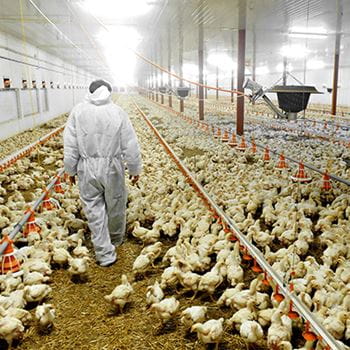
The unit handles cases from all parts of Saskatchewan and all kinds of livestock. Beef cattle are the most common, but bison, dairy cattle, sheep, goats, pigs, poultry and horses show up too.
The health problems are just as varied. Reproductive issues, respiratory disease, gut problems, poisoning and nutritional deficiencies are all common. So are zoonotic diseases that can spread from animals to people.
Over the years, the Disease Investigation Unit has even discovered diseases that had never been seen in Saskatchewan before.
Sharing what's learned from each case is a big part of their work. Findings go back to local veterinarians and producers, so the same problems do not keep happening. Some cases have even grown into full research projects.
One recent example involves Cache Valley Virus (CVV) in sheep. Beginning in late 2024, Prairie Diagnostic Services (PDS) saw an increase in ovine abortion submissions with severe musculoskeletal and neurological malformations.
Through collaboration between PDS, the DIU and researchers at WCVM, CVV was confirmed as the cause. A targeted investigation program examined malformed fetuses submitted between November 2024 and January 2025. The work generated valuable diagnostic material that helped PDS develop inhouse PCR testing and is now supporting ongoing genomic research on the virus.
Dr. John Campbell led the Disease Investigation Unit for most of his years at the WCVM. He joined the college in 1991 after graduating from the Ontario Veterinary College at the University of Guelph in 1985 and practicing in a rural clinic.
Under his leadership, the unit grew from a small, informal group into a trusted provincial resource. By the time he retired, the unit had completed more than 300 investigations.
Dr. Campbell also helped build and lead two cow-calf health networks – one in Western Canada and another that grew to cover the whole country. He published more than 100 research papers and mentored over 50 graduate students along the way.
His work earned him several major awards. These include the 2019 Canadian Beef Industry Award for Outstanding Research and Innovation and the 2023 Canadian Veterinary Medical Association Merck Veterinary Award.
At the end of June 2025, Dr. Campbell retired from the WCVM. We wish him all the best and miss his leadership greatly.
The Disease Investigation Unit will keep doing the same great work it has always done, under the new leadership of Dr. Nathan Erickson. Dr. Erickson joined the WCVM in 2015 and works in the ruminant field service section in the Department of Large Animal Clinical Sciences. He has a strong background in cattle production medicine, including feedlot and cow-calf work. He has been involved in investigating cases since he arrived at the WCVM, so the work is familiar even if the role is new.
Dr. Erickson will lead the unit as it continues to enable the livestock industry to respond early and to reduce the economic impact of possible foreign animal disease incursions and emerging livestock disease crises.
For more information on the Disease Investigation Unit, please visit the Western College of Veterinary Medicine website.