
By Lynnae Ylioja, MSs, AAg, Range Management Extension Specialist, Outlook
April 2026
In the year following seeding a forage stand, things might not look as good as you anticipated. Shifting your mindset about what a successful stand looks like in year two could ease your worry and improve the chance of success. There are a few things to keep in mind when evaluating that new forage stand.
New forage stands will likely be weedy.
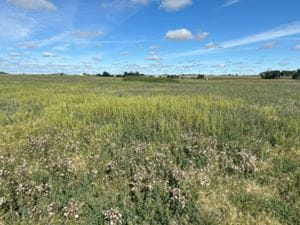
kochia, lambs-quarters, foxtail barley and Canada thistle.
Managing weeds before seeding forages helps to reduce the competition initially, but some weeds are inevitable. The combination of bare ground and soil disturbance that result from seeding create the perfect habitat for annual weeds like kochia and lambs-quarters. In-crop weed control is challenging in a mixed stand, but perennial forages will outcompete most annual weeds in the first couple of years. The exception is perennial weeds like Canada thistle, which take active management to get rid of.
Establishing forages takes time.
Even when you’ve done the right planning and followed all the recommended practices, some things are beyond our control or are just a part of dealing with perennial forages. Being patient is critical so remember forages can be slow to start due to the following factors:
- Small seeds – Many forage species have small seeds, which limit energy reserves and moisture. Small seeds rely on close contact with the soil to access the moisture and nutrients necessary to germinate. The small size also means they need to be seeded shallow and are susceptible to drying out, further reducing the chance of germination.
- Soil challenges – Forages are often seeded on land prone to challenges like salinity or erosion. This makes it difficult to establish most plants.
- Root development – Perennial plants may look less impressive to begin with because they focus their energy on building strong roots rather than immediately producing lots of aboveground biomass.
- Adequate moisture –Moisture is often a limiting factor that is out of our control and can be a real challenge for forage growers. While we can’t control weather, we can hope for rain and adjust our seeding dates to give new forages the best opportunity of accessing soil moisture and increase the chance of success.
Don’t give up too soon.
In the year following seeding, waiting until the plants are actively growing can give you a better idea of establishment success, rather than going out first thing in the spring. This is because some seedlings may have winterkilled and some seeds may be lying dormant, waiting to germinate when the conditions are right. Species like cicer milkvetch sometimes take up to three or four years to germinate.
You may also notice bare ground or several species dominating the stand while others appear absent. Alfalfa and shorter-lived grasses often establish well in the first year, followed by the growth of longer-lived grasses in the second year. Creeping species like smooth brome will fill in bare spots as the stand matures.
Think critically about your goals for the stand.
Deciding to start over is sometimes the right decision, but it doesn’t guarantee the next stand will be more successful. Think about what you can do to improve the stand you have and consider the time and cost to start over. Consider whether you need the forage this year or if you can give it some extra time to establish by deferring haying/grazing for a season. A strong start and good management practices are important for long-term success and productivity of the stand.
To learn more about forage establishment, sign up for our upcoming webinar on weed management during forage establishment or call the Agriculture Knowledge Centre at 1-866-457-2377.