
By Dr. James Tansey PhD, AAg, Provincial Insect and Vertebrate Pest Management Specialist
April 2026
Burrowing rodents like the Richardson’s ground squirrel (RGS) can reduce crop yields and burrows can injure livestock and damage equipment. Rodenticides are used to control these pests, but there are other methods that can be included in an integrated pest management approach. An effective method is constructing raptor nesting platforms, perches and boxes. Encouraging raptors to stay and hunt in a location can have a significant impact on rodent populations.
Raptors are birds of prey that include falcons, hawks, eagles, kestrels and owls, which feed on insects and rodents. Many raptors prefer hunting in open areas like fields, pastures and ditch banks. Raptor nesting platforms, perches or boxes can be placed within or on the edge of a field to encourage raptors to stay. An increase in raptors means more feeding on rodents. Raptors can be remarkably effective, work done in California showed that raptors were 67 per cent more effective than rodenticides. Some of the same species in the California study are also found in Saskatchewan, including the red-tailed hawk, great horned owl, and the northern harrier.
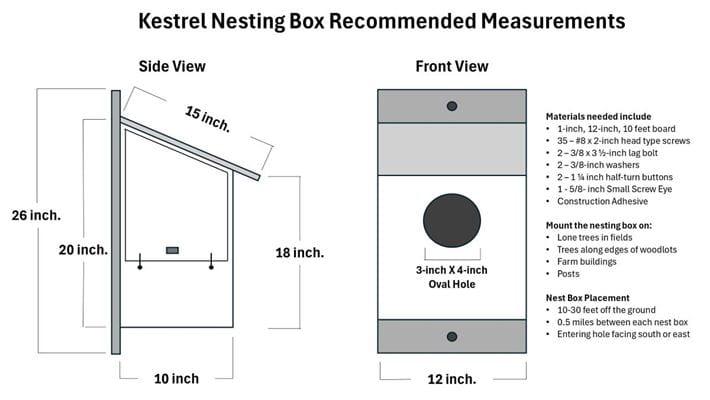
The American kestrel is a robin-sized falcon that feeds on grasshoppers and other birds. They also feed on young RGS. They use natural cavities like trees or nest boxes (figure 1) nest boxes should be placed in the center of a field or around the perimeter, mounted on lone trees, posts or farm buildings and be 10 to 30 feet up. Kestrels are very territorial, so space boxes are at least 0.5 miles apart. In addition to rodents, kestrels will also prey on songbirds.
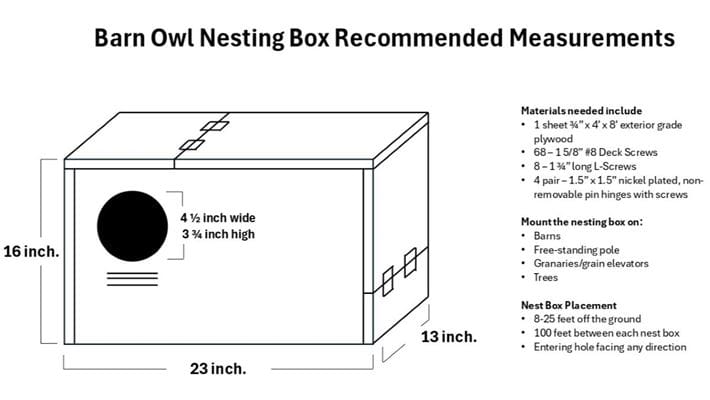
Barn owls are infrequent nesters in Saskatchewan, but the use of nest boxes (figure 2) can promote populations. Barn owls hunt small rodents, small birds, rabbits and grasshoppers. They can catch and eat 10 to 12 rodents per night. Boxes can be placed on free-standing poles and structures and should be eight to 25 feet up and 50 to 100 metres apart. To prevent heat stress, include proper ventilation, white paint and an opening facing northeast. Great horned owls eat barn owls, so boxes should not be placed near wooded areas or in areas where great horned owls are confirmed to congregate.
Nest platforms (figure 3) and perches encourage red-tailed hawk, northern harrier, ferruginous hawk, cooper’s hawk, and great horned owls. Red-tailed hawks hunt rodents, rabbits, reptiles and small birds. Northern harriers and ferruginous hawks are also important predators of RGS. Great horned owls have great dietary flexibility and can significantly reduce pests. Cooper’s hawks prefer wooded and urban habitats; therefore, perches and maintenance of trees promotes pest control. However, cooper’s hawks can prey on chickens and songbirds, they will also deter kestrels and barn owls away from nesting boxes.
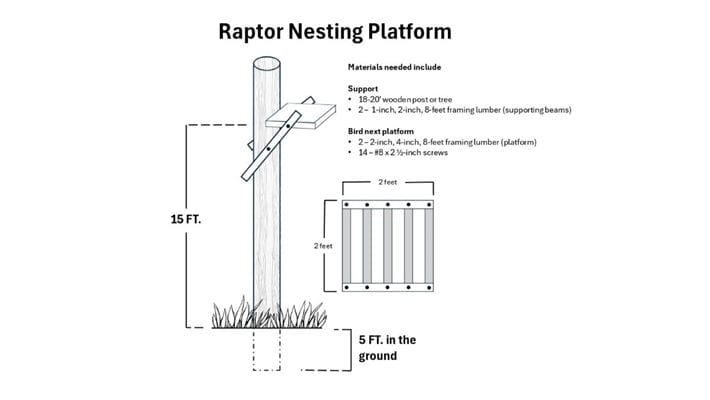
Perches and platforms should be placed in open areas along hilltops or flat ground with a good view of the surrounding area. Placement of 15 to20 feet high and every 200 feet around a field perimeter will provide optimal control; one perch can have an impact on pests within five acres. Perches should point east/west to avoid instability due to wind and decreased visibility due to sunlight. Further, they should be placed far away from human activity to reduce abandonment. NestWatch is a great resource that has layouts for a variety of next boxes and the guidelines to placement for each species of raptor.
For further information, contact the Agricultural Knowledge Centre at 1-866-457-2377.