
Davidson Ugheoke AAg, Crops Extension Specialist, Moose Jaw
February 2026
Scouting is one of the most important management practices in crop production, yet it is often undervalued or delayed until it’s too late. In Western Canada, where growing seasons are short and conditions can change quickly, regular and systematic scouting is challenging to fit in but it is the foundation of informed decision-making and a key driver of yield protection and input efficiency.
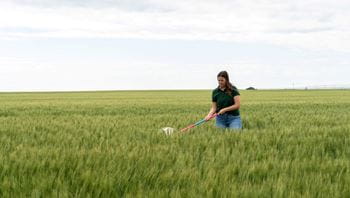
In prairie cropping systems, early-season weed competition can significantly reduce yield, especially in crops like canola and pulses. Scouting helps identify weed species present, their growth stage and distribution across the field. This information supports accurate herbicide selection, timing and rate. It also plays a critical role in herbicide resistance management. Spotting surviving weeds after application and documenting patterns helps identify potential resistance issues before they become widespread and costly.
Insect pests such as flea beetles in canola, cutworms in cereals, grasshoppers and lygus bugs in pulses, can cause rapid damage under the right conditions. Economic thresholds exist for many of these pests, but thresholds only work when fields are actively monitored. Without scouting, producers risk spraying too late, spraying unnecessarily or missing localized infestations that could have been managed more efficiently.
Crop diseases such as sclerotinia in canola, leaf diseases in cereals and root rots in pulses are influenced by weather, crop rotation and localized canopy conditions. Frequent scouting allows producers to assess disease risk based on actual field conditions rather than calendar dates or generalized forecasts. This is especially important for fungicide decisions, where timing and necessity directly impact return on investment.
Nutrient deficiencies and environmental stress often show early warning signs that can be identified through regular field checks. Symptoms such as uneven growth, chlorosis, purpling or stunting may point to issues with either macro or micronutrients, as well as problems such as compaction or water stress. While not all issues can be corrected in-season, accurate diagnosis helps guide immediate management decisions and informs future fertility and soil management plans.
Modern technology tools like satellite imagery, drones, weather models, digital scouting apps and high-level tools like the Fusarium Head Blight Risk Mapping Tool®, all provide valuable insights and help prioritize where to look. These tools complement the boots on the ground, by highlighting areas of stress or variability that deserve closer inspection. However, technology cannot replace firsthand observation.
Fields should be checked regularly, especially during critical growth stages, observations should be recorded, including pest levels, crop stage, weather conditions and management actions taken. By relying on field-based observations and thresholds, producers can reduce unnecessary pesticide use and slow the development of resistance in weeds, insects, and diseases. Consistent record-keeping builds a field history that improves future decision-making and supports long-term planning. In modern day agriculture, where margins are tight and conditions are unpredictable, scouting is one of the most cost-effective practices available to producers. It requires time and attention, but the return comes in the form of protected yield, more efficient input use and reduced risk. It empowers producers to make timely, confident decisions based on what is happening in their fields.
Please contact your local crops extension specialists or the Agriculture Knowledge Centre at 1-866-457-2377 with additional questions related to scouting and planning ahead for the 2026 crop season.