
Saskatchewan is known for its rich natural resources and its vital role in global food production. The province's diverse landscape, filled with forests, lakes, rivers and wetlands, provides essential resources for future generations. Equally important is ensuring the agriculture sector remains strong, supporting food security and economic development.
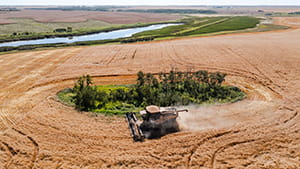
Saskatchewan is home to 4.6 million acres of wetlands. A recent wetland inventory undertaken by the Water Security Agency (WSA) found that 86 per cent of our wetlands remain on the landscape. This information shows that Saskatchewan producers have done an excellent job in finding the balance of retaining the large majority of wetlands on the landscape while also using drainage as a tool where it makes sense. Responsible drainage enables producers to manage water effectively, improving farm efficiency, enhancing soil health, reducing input costs, and increasing food production, all while ensuring environmental stewardship.
tool for producers to increase farming efficiency,
reduce farm inputs, increase food production,
and support Saskatchewan’s economic growth.
For nearly a decade, WSA has been supporting producers to manage water responsibly and sustainably on their land. Recently, WSA introduced the Agriculture Water Stewardship Policy, an important component of the greater Agriculture Water Management Program. This policy takes a balanced approach to drainage and wetland management, supporting a resilient and thriving Saskatchewan.
The policy takes a made-in Saskatchewan approach, recognizing the province's diverse landscape. What works for someone in the southwest may not work in the northeast. A regional approach sets specific wetland retention goals for each area, requiring landowners to preserve a portion of wetlands in their drainage projects. This requirement may be higher if the project is located upstream of a critical water source.
The policy provides flexibility in how the retention targets are met. Every farm in Saskatchewan is unique, and WSA will work with farmers to find an option that works for their operation. Most farmers are already choosing to retain some wetlands on their land; this policy is not expected to change the majority of producers’ approach to managing agricultural water.
A key element of this strategy is ensuring producers have access to the information and expertise they need to be able to complete approved drainage projects. Given the detailed nature of the application process, WSA will continue to encourage the involvement of Qualified Persons—experts such as professional engineers, agrologists and certified technicians—who can help prepare the required documentation, including land permissions, technical designs and mapping.
In developing the policy, WSA engaged over 80 organizations and invited 168 additional stakeholders, including agricultural groups, municipalities, Métis and Indigenous communities, environmental organizations, and research partners to contribute. More than $1 million was invested in research, funding 11 agricultural demonstration projects that helped shape the policy. WSA is also committing another $1 million over the next three years for ongoing research and monitoring to ensure the policy’s long-term success for both the agriculture sector and environmental stewardship.
With a balanced approach, Saskatchewan can continue to thrive as a leading agricultural powerhouse, while ensuring environmental sustainability and resilience for the future.
For more information, please visit Water Security Agency.