Buildings can provide a safe warm place for bats to roost and/or hibernate. As a property owner with bats, you can choose to help bat conservation by providing a healthy habitat and by safely bat-proofing your home. The fall is a great time to ensure that your home is sealed off to keep wildlife out. As temperatures fall, all sorts of animals could be looking for a warm place to spend the winter – not just bats – but squirrels, pigeons, stray cats and more. If you would rather not share your space, it is best to avoid having them enter; then you will not have to consider disturbing them once they have moved in.
At appropriate times of the year, one-way exits/eviction devices can be installed and then exterior access points permanently sealed once all the bats have left the structure. Eviction methods work with the biology of bats and minimize renovation costs.
A Bat Eviction Permit is required prior to evicting or removing bats. See the Environment Resource Library article “Bat eviction policy and permits” for permitting information.
Refer to the Bat Eviction Policy for further information.
You can lower your chances of harming bat populations by installing bat houses on your property and limiting bat eviction measures to the spring and fall months. Eviction may be the best option if:
- Bat hazards and/or issues cannot be rectified;
- Living areas cannot be sealed to prevent bat access; or
- Major repairs, renovations or a demolition is planned.
If there is an immediate human health and safety concern or major impediment to building use, see the Environment Resource Library article “Bat eviction policy and permits” for instructions on obtaining a Bat Eviction Permit and completing the Bat Removal Form.
Bats are beneficial to the environment, but can carry rabies, a fatal disease in humans. If someone has been or suspects they or a pet could have been bitten, scratched or come into physical contact with a bat, they should contact the local public health office or the Saskatchewan HealthLine by dialing 811 or the provincial rabies hotline at 1‑844‑772‑2437 or RRAV@gov.sk.ca as soon as possible.
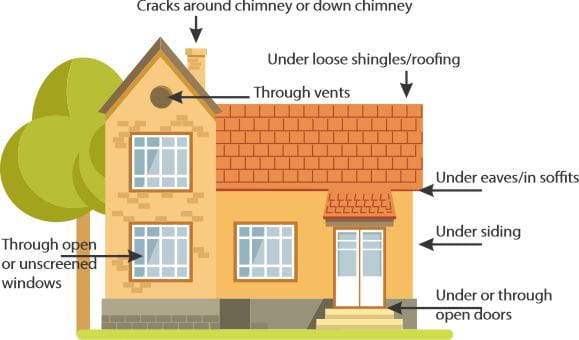
If you suspect bats are using your home to roost, go out at dusk on a clear, warm evening. Watch for activity around chimneys, loose shingles/roofing, vents, eaves, windows, doorways and siding.
If you see bat activity and are considering eviction methods, please refer to Bat-Friendly Eviction Timing.
The below diagram of a house shows possible access points for bats: